
Driving instructor DVSA check appointments can feel stressful when you are not sure what the examiner will look for. Many instructors worry about small faults, paperwork gaps, or whether a standards check will affect their grade and reputation. This guide explains what to expect, how the process works, and how to prepare with confidence.
You can find more helpful resources on drivinginstructornearme.net.
Key Takeaways
- DVSA checks assess your teaching ability.
- You need a real pupil for the lesson.
- The examiner marks planning, risk, and teaching.
- Preparation reduces avoidable faults.
- Official guidance is available on Gov.uk.
What is a driving instructor DVSA check?
A driving instructor DVSA check is an assessment of how well you teach a normal lesson to a real pupil. The DVSA uses it to judge your lesson planning, risk management, and teaching style. For approved driving instructors, this usually means a standards check rather than a theory or practical retest.
The examiner watches how you run the lesson from start to finish. They want to see safe instruction, clear goals, and teaching that matches the pupil’s needs. This is directly relevant to driving instructor dvsa check.
This matters because the result can affect your position on the ADI register. If you are new to the process, official guidance on Gov.uk can help you understand the marking areas before the day.
Why the check matters
The DVSA does not expect a perfect lesson. It expects a well-structured session where you help the pupil learn while keeping control of risk. For anyone researching driving instructor dvsa check, this point is key.
According to the DVSA ADI standards check guidance on Gov.uk, examiners assess 17 competencies across lesson planning, risk management, and teaching and learning strategies.
What happens during the check?
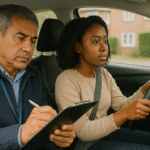
During a driving instructor DVSA check, you give a normal lesson while a DVSA examiner sits in the back and observes. The check usually lasts about an hour and focuses on how you teach, not just on the pupil’s driving. Your pupil should be genuine and at a suitable stage for the planned lesson.
Before you start, the examiner confirms details and explains the process. You should introduce the lesson clearly, agree aims with the pupil, and show that you can adapt if things change on the road. This applies to driving instructor dvsa check in particular.
Throughout the session, the examiner looks for good communication and safe decision-making. They also want to see whether you spot faults early and help the pupil correct them in a calm, useful way. Those looking into driving instructor dvsa check will find this useful.
What the examiner looks for
- Clear lesson aims
- Questions that check understanding
- Instruction matched to the pupil’s level
- Timely action on safety risks
- Feedback that helps learning
Gov.uk guidance states that the standards check lasts about one hour, including a debrief from the examiner after the lesson. This is a critical factor for driving instructor dvsa check.
How can you prepare and avoid common mistakes?
You can prepare by treating the assessment like a well-planned everyday lesson. Choose a suitable pupil, set a clear lesson goal, and think ahead about the roads, risks, and likely faults. Most problems come from poor planning, too much talking, or missed safety issues. It matters greatly when considering driving instructor dvsa check.
It helps to review previous lesson notes before the appointment. If the pupil’s experience does not match the lesson topic, the session can quickly lose structure and make your teaching look less effective. This is especially true for driving instructor dvsa check.
Many instructors also forget to involve the pupil enough. You should ask questions, encourage self-reflection, and avoid turning the lesson into a running commentary from the driver’s seat. The same holds for driving instructor dvsa check.
Simple ways to get ready
Keep your paperwork organised and arrive early. You can also rehearse lesson openings, fault analysis, and recap questions so the driving instructor DVSA check feels more familiar on the day.
For broader teaching advice, see . You may also find employment guidance from ACAS and practical public service information on Citizens Advice useful where relevant.
Road safety remains central to every assessed lesson. The Department for Transport reported 1,624 road deaths in Great Britain in 2023, which shows why the DVSA places such strong emphasis on hazard awareness and risk management. This is worth considering for driving instructor dvsa check.
Will the DVSA check watch how I manage risk?
Yes, risk management sits at the heart of a driving instructor dvsa check. The examiner wants to see how you spot hazards early, adapt the lesson to the pupil’s level, and keep control without taking over too much.
You should show clear planning from the start of the lesson. Explain the route, identify likely hazards, and set simple goals that match the pupil’s ability, because that helps the examiner see your decisions have a safety purpose. This insight helps anyone dealing with driving instructor dvsa check.
During the drive, keep your instructions calm and timely. If a situation changes, such as heavy traffic or a complex roundabout, adjust the task and support the learner in a way that protects safety and still supports progress. When it comes to driving instructor dvsa check, this cannot be overlooked.
The wider context matters too. The Department for Transport reported 1,624 road deaths in Great Britain in 2023, which underlines why hazard awareness and safe decision-making remain central to assessment standards, as shown in official road casualty statistics 2023.
Expert insight.
What mistakes can cause problems during a DVSA standards check?
The most common problems are weak lesson planning, unclear feedback, and poor control of risk. Examiners often notice when an instructor talks too much, gives late directions, or sets tasks that do not suit the learner’s experience. This is a common question in the context of driving instructor dvsa check.
A standards check is not just about whether the pupil drives well. It tests whether you teach in a structured way, adapt your coaching, and intervene only when needed, while keeping the lesson safe and focused on progress. This is directly relevant to driving instructor dvsa check.
It also helps to avoid admin slips before the lesson starts. Confirm the pupil’s level, agree the lesson aim, and make sure your communication stays professional, especially if nerves make you rush or over-explain, which can affect judgement and clarity. For anyone researching driving instructor dvsa check, this point is key.
Workplace pressure can affect performance too. The Health and Safety Executive found that 875,000 workers suffered from work-related stress, depression or anxiety in Great Britain in 2022 to 2023, which shows why preparation and calm routines matter. ACAS offers practical support on mental health at work guidance.
In practice, many instructors lose marks because they keep the lesson plan in their head instead of saying it out loud to the pupil and examiner.
How should I prepare in the week before the DVSA check?
Focus on structure, not tricks. In the final week, choose lesson themes you teach well, practise giving concise instructions, and review how you will show planning, risk management, teaching style, and feedback during a normal lesson.
Start with a realistic mock lesson using a pupil at the right stage of learning. After that, review whether your briefing was clear, whether the pupil had enough responsibility, and whether your interventions were early, calm, and proportionate.
You should also sort the practical details early. Check the car, documents, timing, and meeting point, then leave the day before for a short review rather than cramming, which usually makes communication less natural and more mechanical.
Preparation works best when it is organised. The Office for National Statistics reported that 28% of adults in Great Britain experienced high levels of anxiety at some point between 27 September 2023 and 7 January 2024, so a simple routine can make a real difference, and NHS stress management tips can help.
How do experienced ADIs lose marks on a driving instructor DVSA check?
Most experienced ADIs do not lose marks because they lack subject knowledge. They lose marks through small habits that weaken client-centred learning, such as talking for too long, correcting too early, or choosing a route that does not match the pupil’s level. On a driving instructor DVSA check, the examiner usually notices these fine details quickly, especially where risk management and lesson adaptation drift apart.
A common issue is over-coaching. An instructor may give accurate, polished guidance, but still reduce the pupil’s responsibility for spotting hazards, planning speed, or reflecting on mistakes. If the pupil becomes dependent on prompts, the lesson can look safe on the surface while scoring less well for teaching and learning strategies.
Another weak spot is lesson mismatch. A well-structured roundabout lesson may still underperform if the pupil clearly lacks the core mirror, signal and positioning routine needed for that route. The DVSA check rewards instructors who adjust in real time, not those who stick rigidly to a pre-planned brief.
Where the marks often slip
- Too much instructor talk and too little pupil analysis
- Questions that test memory, not understanding
- Intervening before the pupil has time to identify and fix an error
- Using the same prompt style throughout the lesson
- Missing chances to review risk after a developing hazard
DVSA guidance for approved driving instructors explains that the standards check assesses lesson planning, risk management, teaching and learning strategies, and whether the lesson matches the pupil’s needs, which is why subtle teaching habits matter so much. You can review the official ADI standards check framework on Gov.uk guidance on the ADI standards check.
One useful benchmark comes from wider learning research. CIPD has reported that active participation improves retention and engagement in workplace learning, and the same principle applies here because pupils learn more when they explain, assess and decide. See CIPD for broader evidence on learning and development practice.
For example, a pupil approaches a busy mini-roundabout too fast and chooses the wrong lane. Instead of immediately delivering a full commentary, a stronger instructor secures safety, then asks what the pupil saw, what they missed, and what speed cue they could use next time. That simple shift shows analysis, adaptation and client-centred teaching in one sequence.
What does strong risk management look like without turning the lesson into a commentary drive?
Strong risk management on a driving instructor DVSA check is not about constant warnings. It means spotting risk early, selecting a suitable level of support, and helping the pupil manage developing situations without removing all responsibility. The best instructors scale their input, from open questions to directed prompts to clear intervention, and they do so at the last safe point rather than the first uncomfortable one.
This is where many instructors either overdo it or leave it too late. If you speak too soon, you can undermine the pupil’s decision-making and lose evidence of teaching skill. If you speak too late, the examiner may judge the risk management as weak, even if the lesson remains broadly under control.
The strongest lessons show graduated support. That means using lighter prompts when the pupil is coping, then becoming more direct only when the risk level rises. It also means linking feedback to the specific hazard, so the pupil understands not just what went wrong, but how to recognise the same pattern earlier next time.
Expert ways to evidence risk management
- Pre-brief one key hazard theme before entering a complex area
- Use short prompts tied to observation, space and speed
- Allow silent processing time where the pupil is safe and stable
- Debrief immediately after the hazard has passed, not five minutes later
- Change route or task if the traffic level exceeds the pupil’s ability
Road safety data gives useful context here. The Department for Transport’s reported road casualty figures show why hazard anticipation and timely intervention remain central to effective driver training, and official UK road safety material can be accessed via Gov.uk road safety statistics. The examiner will expect your teaching to reflect that real-world risk.
The human factor matters too. NHS guidance notes that stress can affect concentration, decision-making and reaction quality, which helps explain why some pupils perform well in quiet areas but deteriorate in denser traffic. Practical strategies that reduce overload can support safer learning, as outlined by NHS stress management advice.
For example, if a pupil is joining a dual carriageway for the first time, a strong instructor might pre-brief mirror checks, acceleration commitment and a no-go fallback if the gap closes. During the manoeuvre, they use one short prompt, then review the timing of the mirror check and speed build-up once the car is settled. That shows active risk management without hijacking the drive.
Should you choose a familiar pupil and route, or show adaptability during the driving instructor DVSA check?
You should aim for controlled adaptability. A familiar pupil and route can help you demonstrate structured teaching, but the DVSA check does not reward comfort alone. The examiner wants to see that you can assess the pupil honestly, pitch the lesson correctly, and adapt when traffic, mistakes or confidence levels change. A safe, realistic lesson usually scores better than an ambitious one that forces too much complexity.
Many instructors think a stronger pupil is always the safer choice. In practice, a mid-level pupil often gives you better evidence because they need coaching, reflection and risk support without constant rescue. A very polished pupil may leave little chance to show your teaching range, while a very weak pupil can create avoidable safety pressure.
Route choice matters in the same way. A familiar area can reduce surprises, but it should still contain enough variety to show planning, progress and hazard work. The key is to build optionality into the lesson, so you can shorten, simplify or extend tasks without making the adaptation look improvised.
How to make that choice well
- Select a pupil whose usual performance is consistent, not unpredictable</li
Option Best For Cost Standards check preparation session with ORDIT trainer Approved driving instructors who want expert feedback before their DVSA check Typically £40 to £90 per hour Mock standards check with written debrief Instructors who need realistic grading practice and action points Usually £60 to £150 per session DVSA National Standard guidance on Gov.uk Instructors reviewing the marking areas and lesson planning expectations Free DVSA ADI standards check information on Gov.uk Instructors confirming what happens on the day and possible outcomes Free Continuing professional development workshop Instructors who want to improve coaching, risk management and record keeping Often £25 to £120 Frequently Asked Questions
What happens during a driving instructor DVSA check?
A DVSA examiner watches you deliver a real lesson to a genuine pupil and assesses how well you plan, teach and manage risk. They grade your performance against the standards check criteria, then give feedback afterwards. You can review the official process on Gov.uk guidance for ADI standards checks.
How do I pass my ADI standards check?
Focus on three things, a suitable pupil, a clearly structured lesson and safe, timely interventions. Show that you adapt to the pupil’s needs rather than forcing a fixed plan. Strong risk management matters throughout, so explain goals clearly, check understanding and change the task when the pupil’s performance or road conditions require it.
What grade do you need on a DVSA standards check?
You need at least a grade B to meet the required standard. A grade A shows a high standard of instruction, while repeated low outcomes can lead to extra action from DVSA. If you want the official wording and current rules, check the standards check pages on Gov.uk.
Can you fail a DVSA check because of the pupil?
The examiner assesses your teaching, not whether the pupil drives perfectly. Even so, a poorly chosen pupil can make it harder to show planning, progress and adaptation. Pick someone reliable enough to demonstrate your teaching skills, but not so polished that you have nothing meaningful to teach during the lesson.
How should I prepare in the week before my standards check?
Run at least one mock lesson, review your lesson structure and confirm the pupil’s availability and readiness. Check your car, paperwork and route options, then practise short goal setting, risk prompts and recap questions. Keep your preparation practical, calm and based on normal teaching, not a scripted performance.
Our content is written by a UK SEO writer with experience producing guidance for driving instructors, learner driver services and compliance-focused motoring websites.
📖 Related Articles
Final Thoughts
A successful driving instructor dvsa check usually comes down to three actions, choose the right pupil, deliver a lesson with clear progress points and manage risk confidently from start to finish. If you keep the lesson realistic, adapt early and explain your aims well, you give yourself the best chance of a strong result.
Your next step is simple, book a mock standards check, prepare one flexible lesson plan for a reliable pupil and compare it against the official DVSA criteria on Gov.uk.
📚 You May Also Like
Driving Test Availability CheckerJul 23, 2025
 How To Check Practical Driving Test Dates
Jul 14, 2025

Author: Driving Instructor Directory