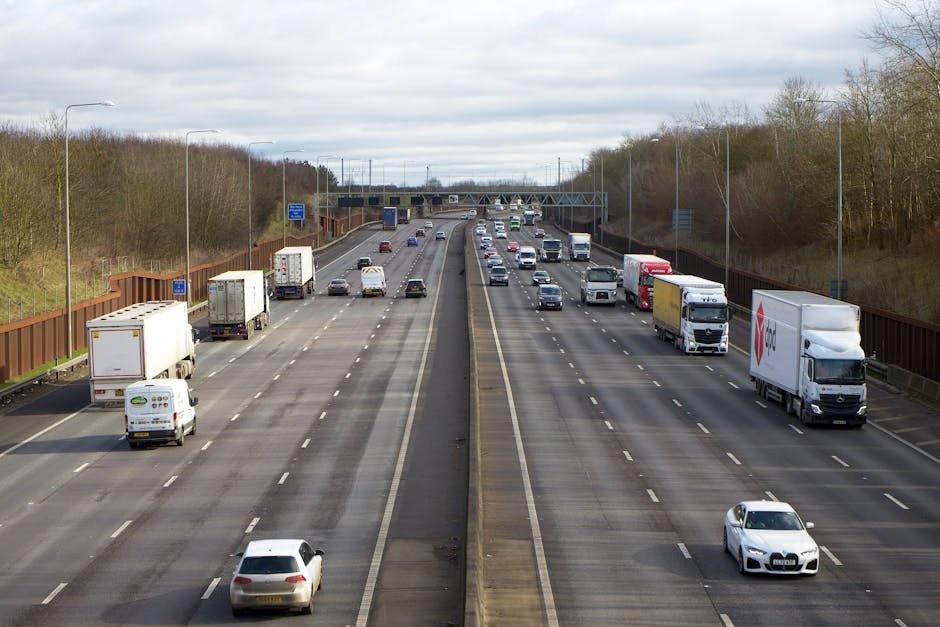

Learner driver motorway UK rules can seem confusing when you first hear what is and is not allowed. You may feel unsure about whether you can practise on a motorway, who must sit with you, and what car you can use. This guide explains the current rules, lesson requirements, and practical tips so you know what to expect.
Key Takeaways
- Learners can drive on motorways in some situations.
- An approved driving instructor must supervise motorway lessons.
- The car must have dual controls.
- Motorway lessons are not compulsory.
- Extra practice can build confidence and planning skills.
Can a learner driver go on the motorway in the UK?
Yes, a learner can drive on a motorway in England, Scotland and Wales, but only if an approved driving instructor supervises the lesson in a dual-control car. You cannot go on a motorway with a friend, parent or other supervising driver unless you have already passed. Northern Ireland has different rules, so always check local guidance first. This is directly relevant to learner driver motorway uk.
The learner driver motorway UK rule changed in 2018. Since then, learner drivers with provisional car licences have been allowed to use motorways when they have the right instructor and vehicle.
This does not mean every learner must take motorway tuition. The law allows it, but your instructor will usually decide if you are ready based on your control, awareness and confidence on faster roads. For anyone researching learner driver motorway uk, this point is key.
What the official guidance says
Gov.uk states that learner drivers can take motorway lessons with an approved driving instructor in a car fitted with dual controls. The same guidance also explains that motorway lessons are voluntary rather than mandatory. Source: Gov.uk.
What rules apply to learner motorway lessons?
Learner motorway lessons follow strict rules. You must hold a provisional licence, display L plates, and drive with an ADI in a dual-control car. If you ride a motorcycle, you still cannot go on the motorway as a learner, even after Compulsory Basic Training. This applies to learner driver motorway uk in particular.
These rules matter because motorway driving leaves less room for hesitation. Your instructor needs a vehicle that lets them step in quickly if traffic speeds, lane changes or joining slip roads become too much at first. Those looking into learner driver motorway uk will find this useful.
The learner driver motorway UK setup also aims to keep practice structured. Instructors usually introduce motorway work after learners handle dual carriageways well and can read signs, judge speed and keep a safe following distance.
Rules learners should remember
- You need a provisional car licence.
- An approved driving instructor must supervise you.
- The car must have dual controls.
- You must display L plates.
- Motorway lessons are optional.
The Highway Code explains motorway signs, lane discipline, smart motorway use and stopping rules. It also makes clear that learners may only drive on motorways with an ADI in a dual-control car. Source: Gov.uk, The Highway Code.
Are motorway lessons worth it for learners?
Yes, motorway lessons are often worth taking if you expect to use fast roads after passing. They help you practise joining, keeping pace with traffic, overtaking safely and reading signs under pressure. That can make your first solo motorway journey feel far less intimidating. This is a critical factor for learner driver motorway uk.
This leads neatly to the main benefit, confidence through guided practice. A calm session with an instructor can help you understand lane discipline, safe gaps and what to do around lorries, heavy traffic and smart motorway signals. It matters greatly when considering learner driver motorway uk.
Motorway lessons also expose weak areas before you pass. If you struggle with mirrors, anticipation or planning ahead, your instructor can correct those habits early. Comparing The Price Of Intensive Courses Vs Weekly Lessons
Confidence matters on fast roads
A Department for Transport report on learner motorway lessons found many instructors believed the change would improve experience and confidence for newly qualified drivers. That supports the idea that supervised exposure can prepare learners for real driving conditions. Source: Gov.uk.
Can a learner driver go on the motorway in the UK?
Yes, a learner driver can use a motorway in the UK, but only in a dual-control car with an approved driving instructor or trainee instructor. You also need L plates, valid provisional entitlement and insurance that covers you for lessons. This is especially true for learner driver motorway uk.
This rule applies in England, Scotland and Wales, and it only covers car learners. If a family member wants to help you practise, they cannot supervise you on the motorway unless they are a qualified instructor in a dual-control vehicle. The same holds for learner driver motorway uk.
That distinction matters because motorway driving involves joining at speed, reading signs quickly and keeping safe gaps in faster traffic. If you want the legal wording, Gov.uk explains the change in its learner motorway rules update.
A Department for Transport report found that 70% of approved driving instructors thought allowing learner motorway lessons would improve road safety. Source: Gov.uk consultation documents.
In practice, many learners assume motorway driving is allowed with any supervising adult, and that catches people out. The law is stricter than normal learner supervision rules, so always check the car and instructor meet the motorway requirements. This is worth considering for learner driver motorway uk.
Are motorway lessons compulsory for learner drivers?
No, motorway lessons are not compulsory for learner drivers in the UK. You can still pass your practical test without driving on a motorway, although many instructors recommend at least one lesson so you build confidence before driving alone. This insight helps anyone dealing with learner driver motorway uk.
The practical test does not include motorway driving because not every test centre has suitable access nearby. Instead, examiners assess similar skills on dual carriageways, such as joining traffic, lane discipline, speed awareness and safe observation. When it comes to learner driver motorway uk, this cannot be overlooked.
Even so, a motorway lesson can help you practise reading overhead signs, choosing the correct lane and leaving enough braking distance at higher speeds. The Gov.uk motorway lessons guidance sets out when and how learners can take these lessons.
Government research reported that 79% of approved driving instructors supported the introduction of learner motorway lessons. Source: Gov.uk consultation response.
How To Prepare For Your Practical Driving Test: A Checklist
Expert insight.
What should a learner driver expect on a first motorway lesson?
A first motorway lesson usually starts with planning, not speed. Your instructor will talk through slip roads, lane choice, mirrors, signals and following distance before you join, then guide you clearly as traffic conditions change. This is a common question in the context of learner driver motorway uk.
Most lessons begin on a quieter stretch so you can get used to accelerating on the slip road and matching the speed of traffic safely. You will also practise staying in the left lane unless overtaking, spotting gantry signs and leaving the motorway without last-minute moves. This is directly relevant to learner driver motorway uk.
Nerves are common, especially if fast traffic feels overwhelming at first. If anxiety affects your concentration, the NHS advice on anxiety offers simple ways to manage physical symptoms before a lesson.
Road safety figures show why this practice matters, because 24% of car occupant fatalities in Great Britain happened on motorways and A roads in 2023. Source: Gov.uk road casualty statistics.
How should a learner handle motorway merging and lane discipline when traffic is fast and gaps are short?
A learner driver on a UK motorway should treat joining as a planned manoeuvre, not a last-second reaction. Build speed firmly on the slip road, match the pace of lane one as closely as conditions allow, and choose a gap early by checking mirrors, signal and a quick blind-spot check. Once on the motorway, stay left unless overtaking, because lane discipline affects flow, safety and the decisions other drivers make around you. For anyone researching learner driver motorway uk, this point is key.
Many learners hesitate because they focus only on the end of the slip road. A better method is to scan ahead from the start, identify two possible gaps, and adjust speed smoothly so one of them remains open. If lane one traffic is dense, your supervising ADI may coach you to ease off briefly or accelerate more positively, depending on what creates the safest merge. This applies to learner driver motorway uk in particular.
Lane discipline matters just as much after you join. Rule 264 of the Highway Code says you should keep in the left lane unless overtaking, and then return to the left when it is safe, which helps stop bunching and reduces undertaking risks. You can check the wider motorway rules on Gov.uk motorway rules in the Highway Code.
Practical signs you are reading the merge correctly
If vehicles in lane one are closing quickly in your mirrors, you probably need stronger acceleration. If they seem static for too long, you may be travelling too slowly and forcing traffic to react around you. Your aim is to merge with minimal disruption, not to stop at the end of the slip road unless traffic leaves you no safe option. Those looking into learner driver motorway uk will find this useful.
For a practical example, imagine you are joining at 50 mph while lane one is moving at about 60 mph. Instead of staring at the car beside you, pick a gap two or three vehicles ahead, accelerate progressively, signal once your plan is clear, and enter behind the target vehicle. That is usually smoother than trying to squeeze into the nearest opening. This is a critical factor for learner driver motorway uk.
As a reminder of why this matters, Gov.uk road casualty statistics show that 24% of car occupant fatalities in Great Britain happened on motorways and A roads in 2023. It matters greatly when considering learner driver motorway uk.
What changes when a learner drives on a smart motorway or through major roadworks?
Smart motorways and long roadworks demand quicker observation and stricter compliance than many standard motorway stretches. A learner driver in the UK needs to read overhead signs early, respond promptly to variable speed limits, and understand that a red X means a lane is closed, not optional. These roads reward anticipation, because missing one sign can place you in the wrong lane with little time to recover safely. This is especially true for learner driver motorway uk.
The biggest difference is information overload. You may have gantry signals, reduced speed limits, lane closures, average speed cameras and closely spaced junction markings in a short distance. Your instructor will often encourage a wider scan pattern, looking well ahead to gantries first, then mirrors, then the vehicle in front, so you do not become trapped by late decisions. The same holds for learner driver motorway uk.
On smart motorways, emergency areas replace the hard shoulder on some sections, so planning matters more if your car develops a fault. National guidance explains lane control signs, emergency areas and what to do in a breakdown, and it is sensible to read Gov.uk guidance on how to drive on a smart motorway before your first lesson there.
Roadworks need a different mindset
Roadworks often narrow lanes and remove normal visual cues, which makes steering accuracy and following distance more important. A learner should avoid sudden lane changes, keep both hands steady on the wheel and resist matching the speed of impatient drivers behind. If signs show a temporary 50 mph limit, hold it steadily rather than fluctuating between 45 and 55 mph. This is worth considering for learner driver motorway uk.
For a practical example, if you see an overhead red X above lane one and arrows moving traffic into lane two, signal and move over as soon as a safe gap appears. Do not continue underneath the red X to gain a few car lengths. Highways guidance treats the red X as a closed lane, and ignoring it can be dangerous as well as unlawful. Show Me, Tell Me Questions Explained (With Practice Tips)
One useful statistic from the Office for National Statistics is that in England in the year ending September 2024, 95.3% of car journeys to work were by driving a car or van, which helps explain why heavily managed motorway sections carry such sustained demand. See ONS travel to work data.
How can a learner and instructor decide if motorway lessons are working, and when extra practice is worth paying for?
The best way to judge progress is to measure specific motorway skills, not just confidence. A learner driver in the UK is getting value from motorway lessons when they can join without prompting, hold a stable speed, choose overtakes sensibly, and respond early to signs and traffic changes. If one of those areas still breaks down under pressure, extra practice is usually money well spent before independent post-test driving begins. This insight helps anyone dealing with learner driver motorway uk.
Ask your instructor to assess performance against repeatable tasks. These might include joining from a short slip road, leaving at a busy junction, overtaking lorries safely, and coping with rain, spray or dusk. A simple score after each lesson helps you see whether nerves are fading because skills have improved, or whether you are only feeling better on familiar routes. When it comes to learner driver motorway uk, this cannot be overlooked.
Extra lessons are especially helpful if you passed recently but have had little high-speed practice, or if you avoid dual carriageways because they trigger the same stress. If anxiety is interfering with concentration, practical self-help advice from the NHS can support your driving plan, see NHS tips to reduce stress.
What good motorway coaching looks like
Strong motorway tuition is structured, not just time spent on the M1 or M25. A good instructor will brief the route, set one or two skill goals, then debrief exact moments where your planning slipped. That kind of feedback is more useful than hearing that you were “fine” overall, because motorway mistakes often come from timing rather than basic car control. This is a common question in the context of learner driver motorway uk.
For a practical example, a learner might complete
| Option | Best For | Cost |
|---|---|---|
| 1-hour motorway lesson with an approved driving instructor | Learners who want a first guided session on joining, lane discipline and leaving the motorway | £35 to £50 |
| 2-hour motorway lesson package | Learners who need time to practise overtaking, smart motorways and route planning | £70 to £100 |
| Pass Plus course | New drivers who have already passed and want extra motorway experience | £150 to £250 |
| Private practice on dual carriageways with a qualified supervisor | Learners building confidence before a motorway lesson | Fuel and insurance costs only |
Frequently Asked Questions
Can a learner driver go on the motorway in the UK?
Yes, but only in England, Scotland and Wales when the learner is driving a car with dual controls and is with an approved driving instructor. The car must display L plates. Learners cannot use motorways with a parent, partner or friend supervising, even if that person meets the normal private practice rules. This is directly relevant to learner driver motorway uk.
Do I have to take motorway lessons before my driving test?
No, motorway driving is not part of the practical driving test. That said, many learners benefit from a lesson because it builds confidence with slip roads, lane choice and reading traffic at higher speeds. Gov.uk explains the current rule on learner drivers using motorways.
Can I practise motorway driving with my parents?
No, not while you still hold a provisional licence. A parent can supervise you on other roads if they meet the legal requirements, but motorway practice must be with an approved driving instructor in a dual-control car. If you have already passed, then you can drive on the motorway on your own, though extra training may still help.
What speed can a learner driver do on the motorway?
A learner driver follows the same motorway speed limit as other cars unless signs show a lower limit. The national speed limit for cars on motorways is normally 70 mph, but you should only drive at a speed that is safe for the traffic and conditions. Check the current UK speed limit rules on Gov.uk.
Are motorway lessons worth it for nervous learners?
Yes, often they are. A structured lesson gives you support with planning ahead, judging gaps and staying calm when traffic builds around you. If nerves affect your concentration, it can also help to read the NHS advice on managing stress before your lesson and build experience in small steps.
The closing guidance in this article draws on professional SEO content writing experience in UK motoring topics, including learner driver rules, DVSA-led guidance and practical training advice.
📖 Related Articles
Final Thoughts
If you are researching learner driver motorway uk rules, focus on three actions. First, confirm the legal rule that motorway practice must be with an approved instructor in a dual-control car. Second, book a lesson with clear goals such as slip road timing, lane discipline and safe overtaking. Third, review each drive in detail so you can fix planning errors early.
Your next step is simple. Contact your instructor and ask for a dedicated motorway session, then compare it with and so you can build a full practice plan before test day and beyond.
📚 You May Also Like
Oct 27, 2025